

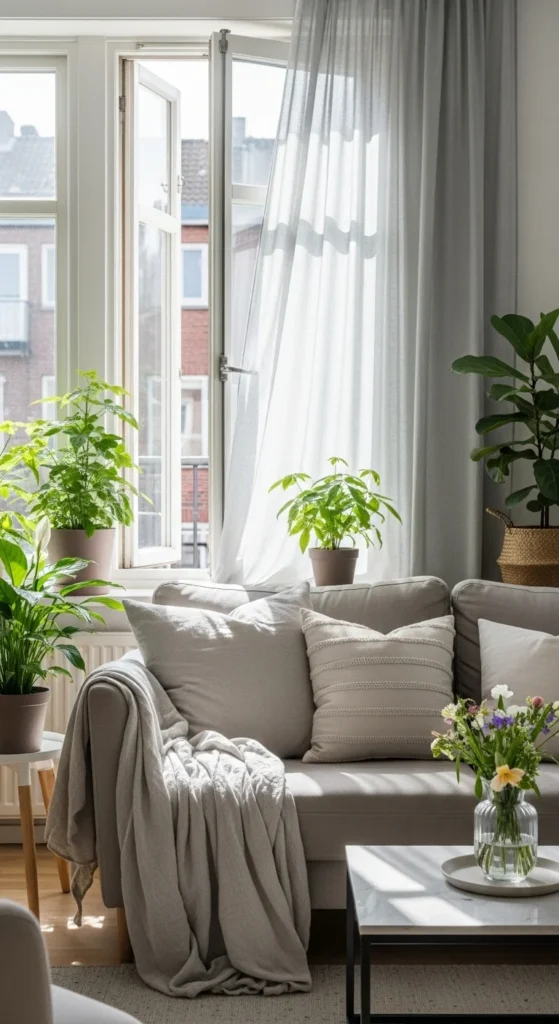
Spring is often the season when the living room starts to feel slightly tired after months of heavy layers and indoor routines. Many people want a change that feels noticeable but still practical. A spring living room refresh doesn’t require buying new furniture or committing to major projects. Small shifts in layout, texture, color balance, and everyday styling can completely change how a space feels. These ideas focus on simple updates that fit real homes, tight budgets, and busy schedules. Each one is designed to be doable in a weekend or even an afternoon, using items you may already have.
1. Swap Out Heavy Throw Pillows
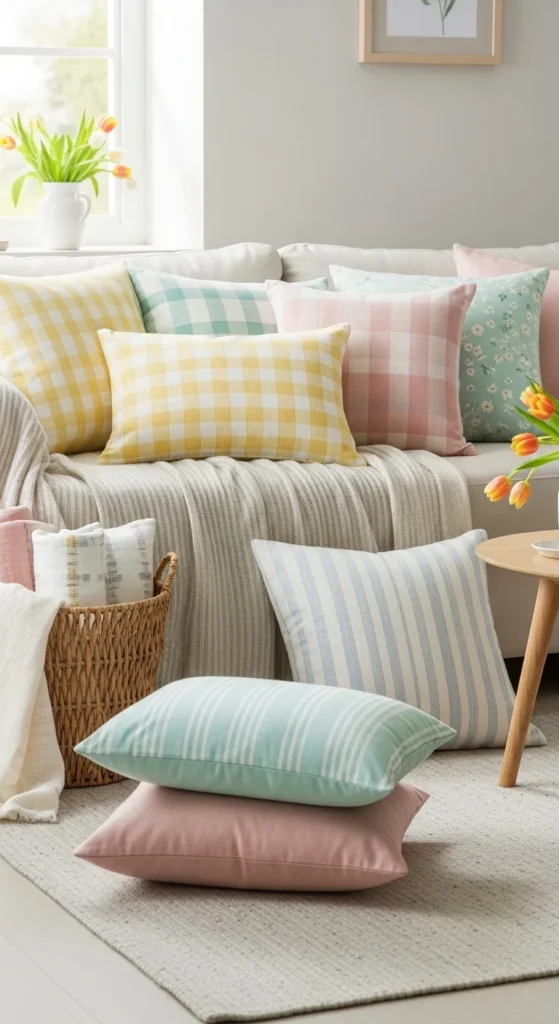
Heavy knit or velvet pillows can make a living room feel closed in once the weather changes. Switching to lighter fabrics is an easy win. Cotton, linen, or canvas covers instantly feel more relaxed. Stick with light neutrals or gentle patterns to keep the room open.
If buying new covers isn’t an option, remove two pillows instead of replacing all of them. Fewer pillows often make a sofa feel calmer. You can also rotate covers from a bedroom or guest room to save money.
Washable covers are practical for everyday use. Simple textures like subtle stripes or small weaves add interest without taking over the space. Keep pillow sizes mixed but balanced.
This small change helps seating feel more inviting and less weighed down, which is ideal for spring lounging and casual gatherings.
2. Rearrange Furniture for Better Flow
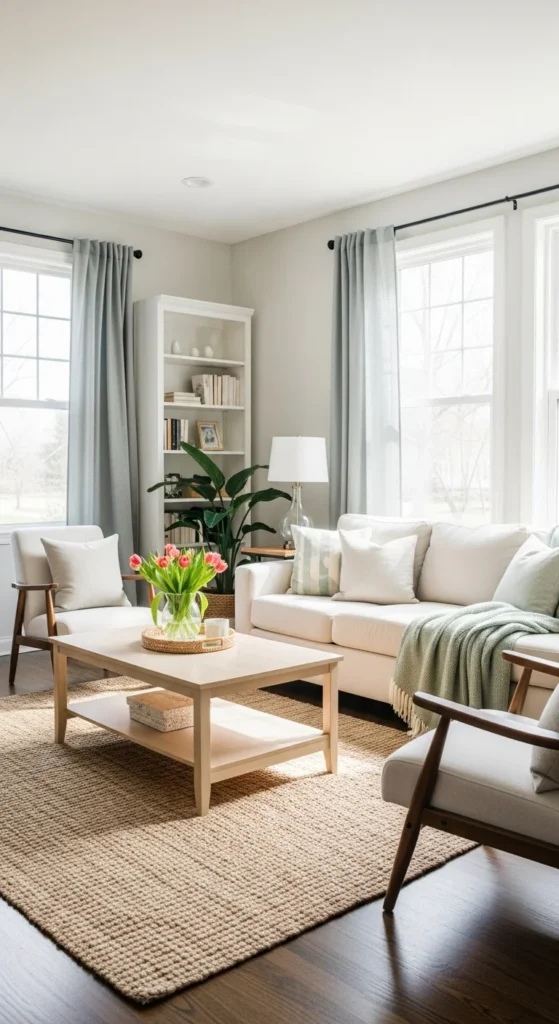
A new layout can make the room feel different without spending anything. Start by pulling furniture slightly away from walls. This often creates better walkways and allows light to move freely.
Try shifting the sofa a few inches or angling a chair near a window. Even small adjustments can change how the room is used. If you have a coffee table that feels bulky, swap it with a smaller side table for a while.
Before moving heavy items, mark the floor with tape to test spacing. This avoids unnecessary effort. Focus on how people enter, sit, and move through the room.
Rearranging furniture brings a sense of reset. It’s one of the easiest ways to make the living room feel different without buying a single item.
3. Introduce Light Area Rugs
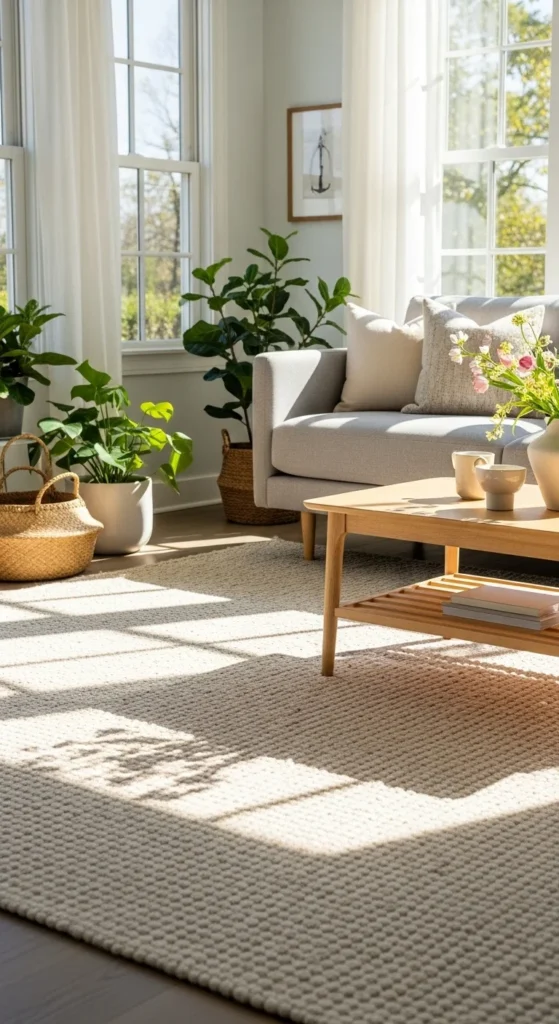
Dark rugs can feel heavy once daylight hours increase. Switching to a lighter rug helps brighten the entire space. Look for low-pile options in beige, cream, or soft gray.
If a new rug isn’t possible, layer a light cotton rug over your existing one. This works well for renters and adds texture without commitment. Flatweave rugs are usually budget-friendly and easy to clean.
Keep patterns subtle so the room doesn’t feel busy. Simple stripes or small geometrics work well. Make sure the rug size still anchors the furniture.
A lighter rug helps reflect natural light and makes the living room feel more open and relaxed.
4. Rotate Decorative Objects
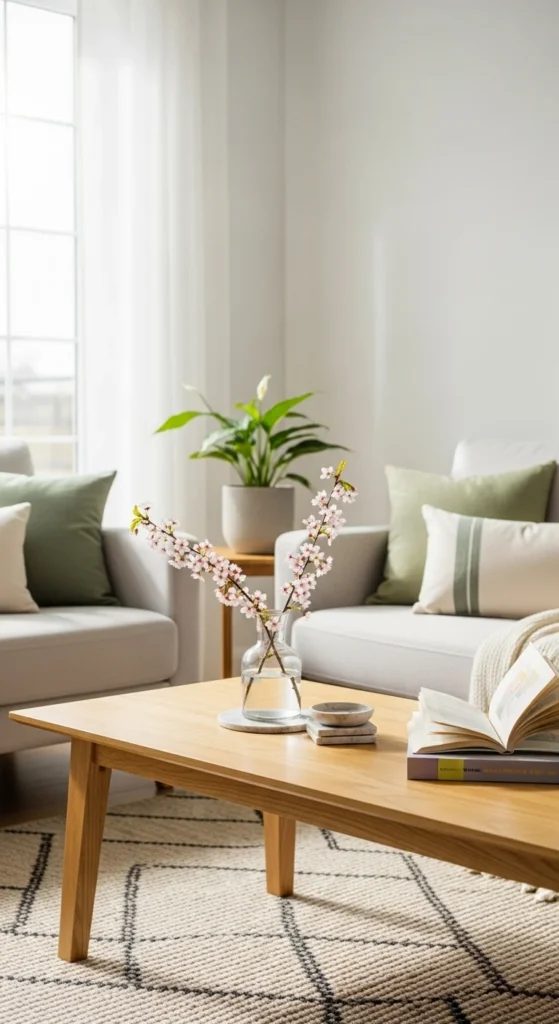
Decor that’s been in the same spot for months can fade into the background. Try rotating items from shelves, side tables, or other rooms. Even swapping locations creates visual interest.
Group items in odd numbers and vary heights. Remove anything that feels bulky or overly dark. Clear surfaces help the room feel lighter.
If you don’t have extra decor, use books stacked horizontally or a simple tray. Less clutter often feels more intentional.
This approach costs nothing and keeps the living room from feeling stale.
5. Add Indoor Plants
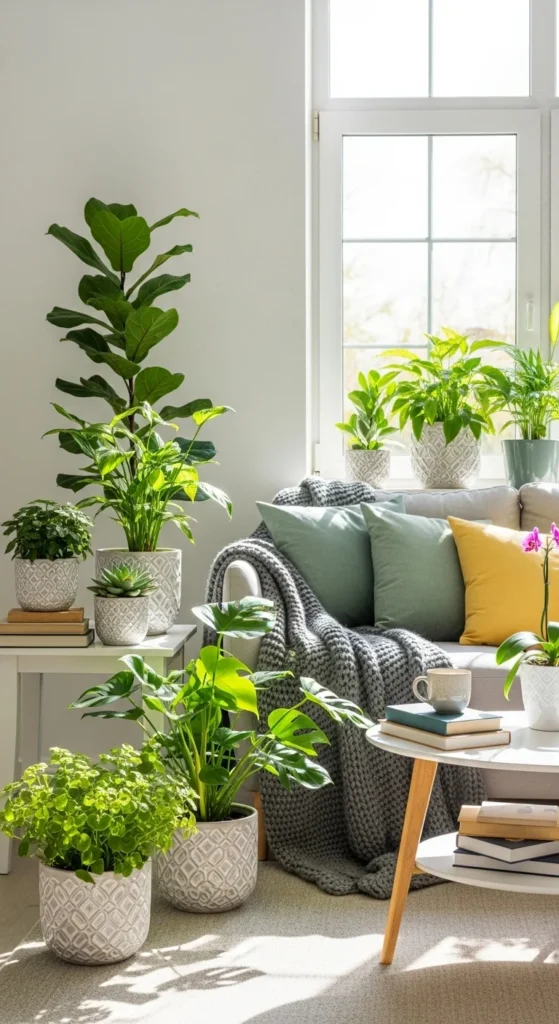
Plants bring life into a living room instantly. Even one or two can make a noticeable difference. Choose easy-care options like snake plants or pothos.
If real plants aren’t practical, high-quality faux greenery still adds softness. Place plants near windows or corners that feel empty.
Use simple pots in neutral tones. Avoid overcrowding shelves or tables. Let each plant have space.
Greenery works well with spring light and adds comfort without effort.
6. Change Lamp Shades
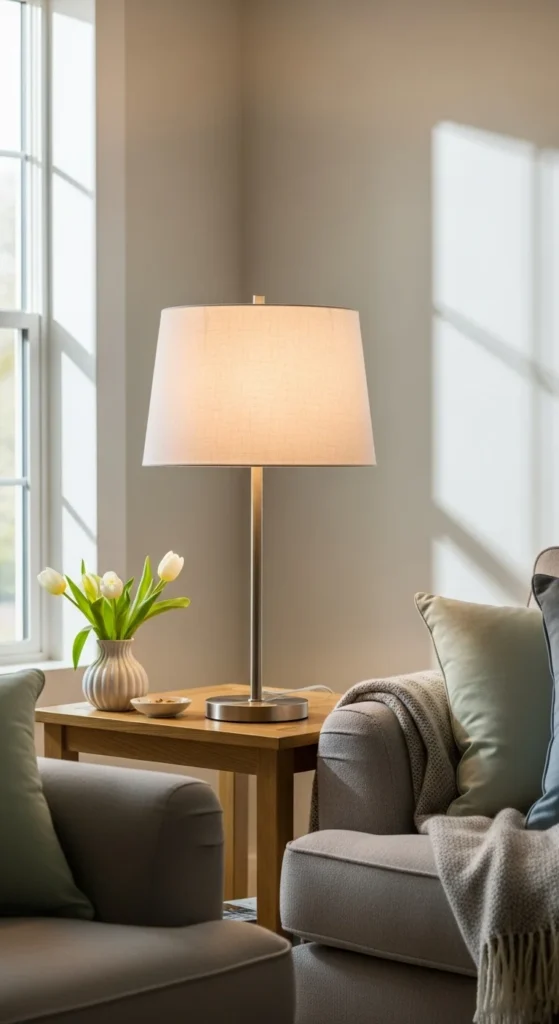
Lamp shades affect how light spreads in the room. Dark or textured shades can block light. Switching to white or cream shades allows more glow.
Drum shades feel modern and easy to find. Thrift stores often have affordable options. Even replacing one shade can help.
Keep the base you already own to save money. Make sure the shade size fits properly.
This update makes evening lighting feel softer while supporting daylight during the day.
7. Style the Coffee Table Simply
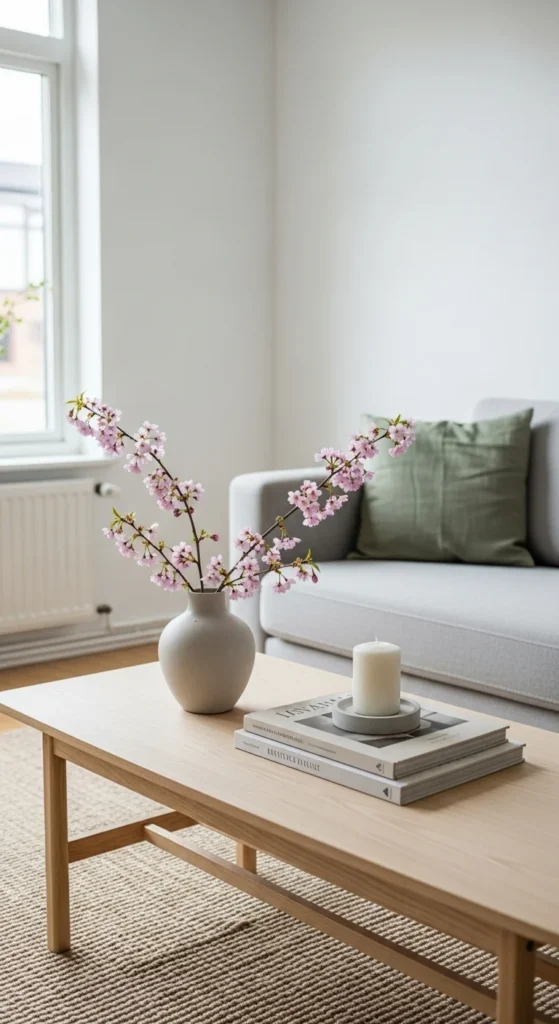
A crowded coffee table can make the room feel busy. Clear everything off and start with just two or three items. A small tray, a book, and a simple object work well.
Choose lighter materials like wood, glass, or ceramic. Avoid dark metals or heavy decor.
Leave open space so the table feels usable. This makes the room more comfortable for daily life.
Simple styling helps the entire living room feel calmer.
8. Use Light Throws Instead of Heavy Blankets
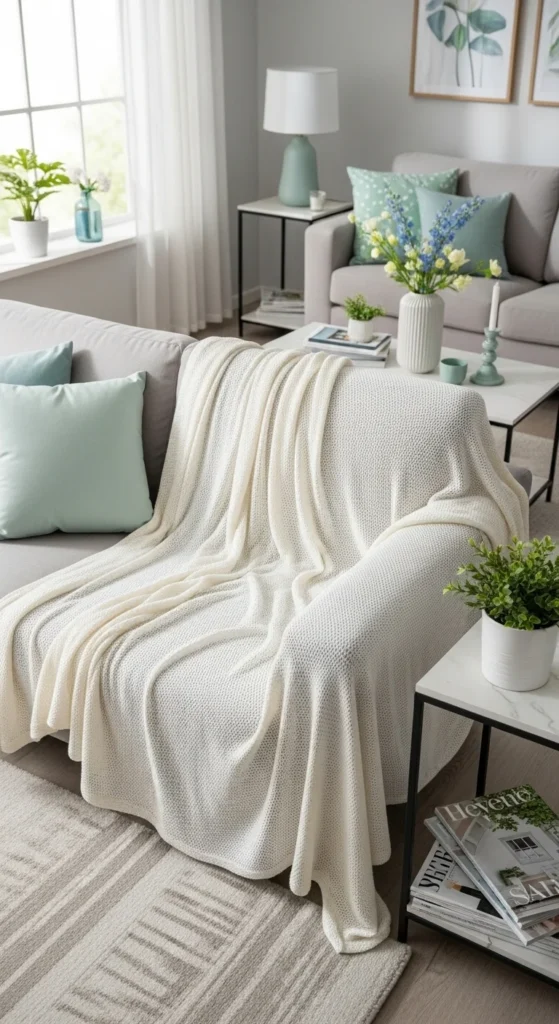
Thick throws are great in winter but feel out of place later. Swap them for cotton or waffle-knit throws. These add texture without weight.
Fold throws neatly over an armrest or basket. Choose soft colors that work with your sofa.
If you already own lighter scarves or shawls, they can work as throws too.
This keeps seating cozy while matching the season.
9. Open Up Window Treatments
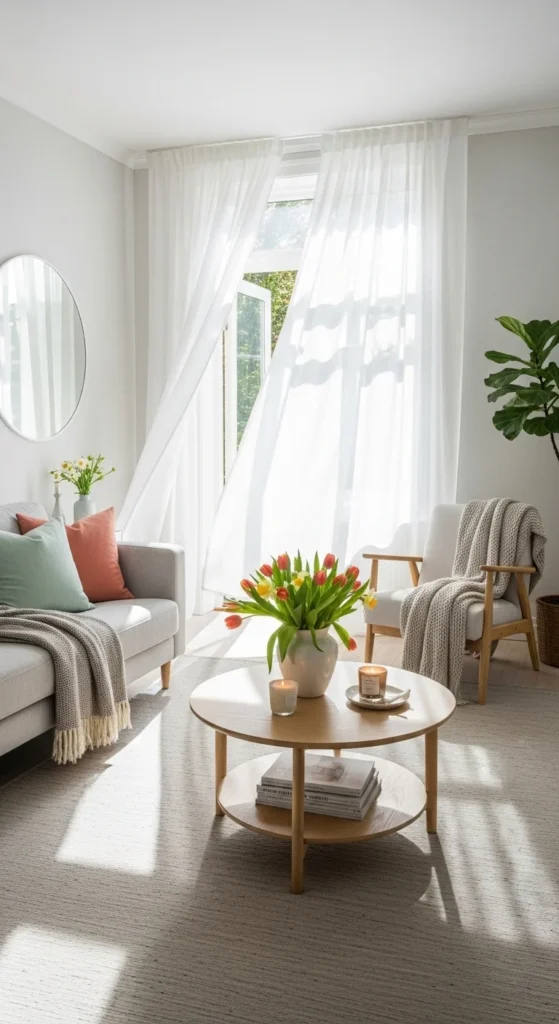
Letting in more daylight changes everything. Tie curtains back or switch to sheer panels. This keeps privacy while allowing light.
If you use blinds, tilt them upward during the day. Clean windows also make a noticeable difference.
Use simple rods and light fabrics. Avoid layering too many treatments.
Natural light helps the living room feel welcoming and relaxed.
10. Update Wall Art Placement
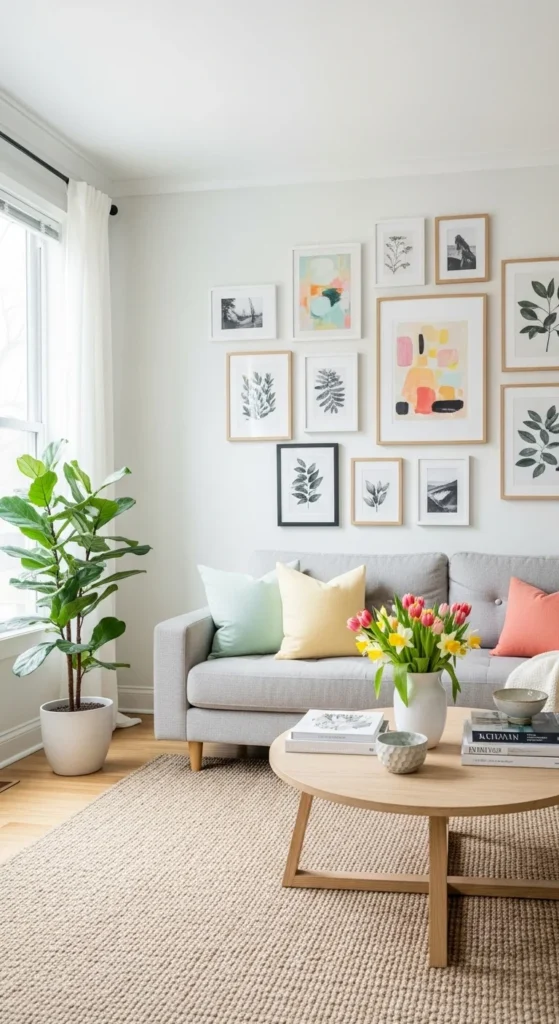
You don’t need new art to make walls feel different. Rearranging frames changes the look instantly. Try lowering art slightly to feel more grounded.
Group similar frames together. Remove any pieces that feel too dark or heavy for the season.
Lean smaller frames on shelves instead of hanging them. This adds flexibility.
Wall changes make the room feel thoughtfully updated.
11. Lighten Up Accent Chairs
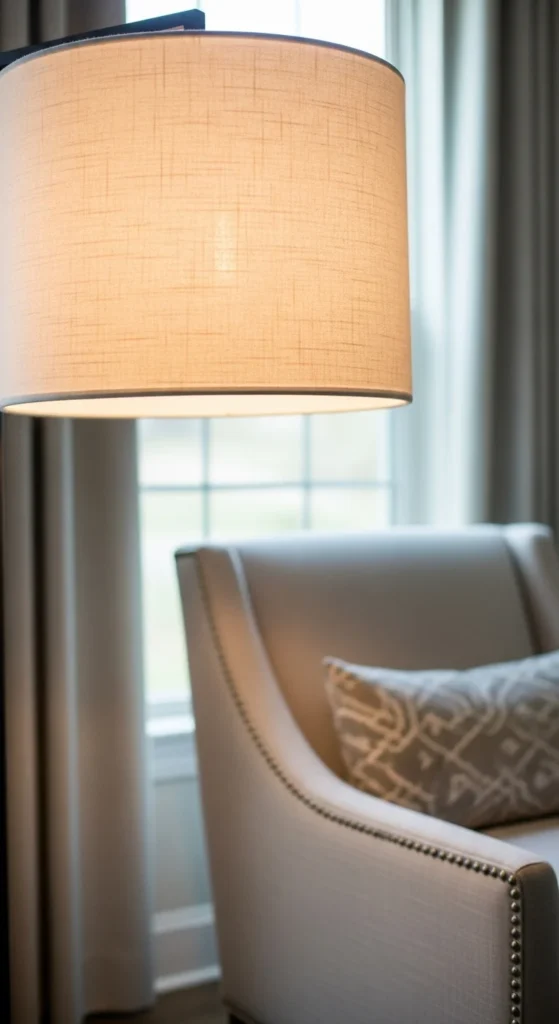
If accent chairs feel heavy, try covering them with a light throw or slipcover. Neutral tones work best.
Rotate chairs slightly toward windows or conversation areas. This improves how the room functions.
Even one lighter chair can shift the room’s balance.
Small seating updates go a long way.
12. Declutter One Shelf at a Time
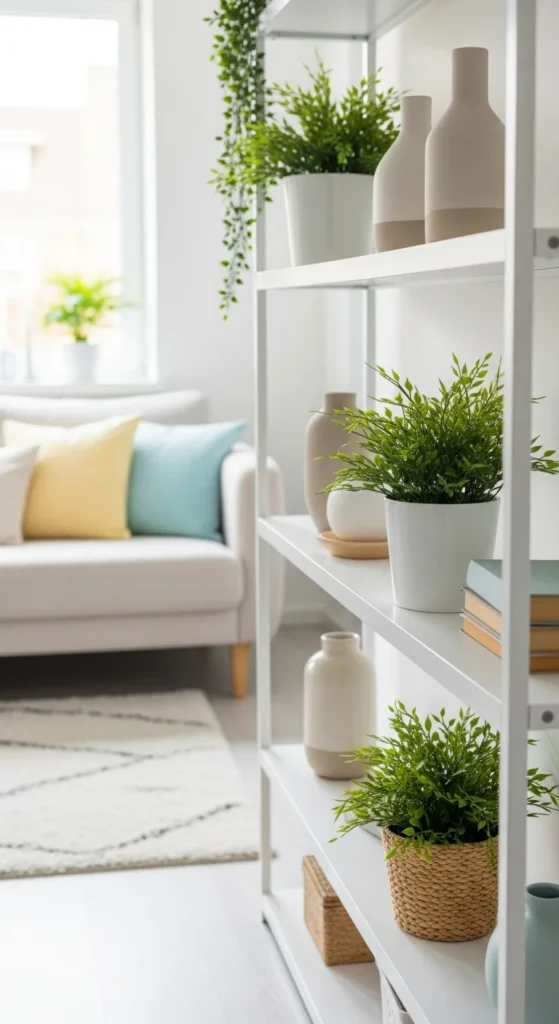
Instead of tackling the whole room, focus on one shelf. Remove half the items and restyle what’s left.
Use space intentionally. Mix vertical and horizontal items.
Decluttering helps the living room feel calmer and easier to enjoy.
13. Add Soft Floor Cushions
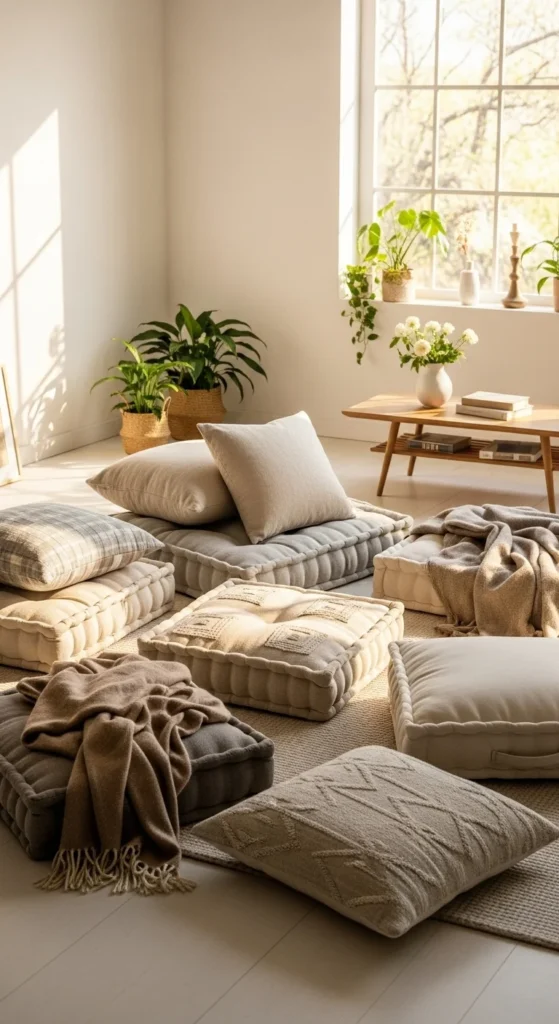
Floor cushions add casual seating. Choose cotton or linen covers.
They’re easy to store when not in use. Neutral colors keep them flexible.
This adds comfort without new furniture.
14. Refresh Side Tables
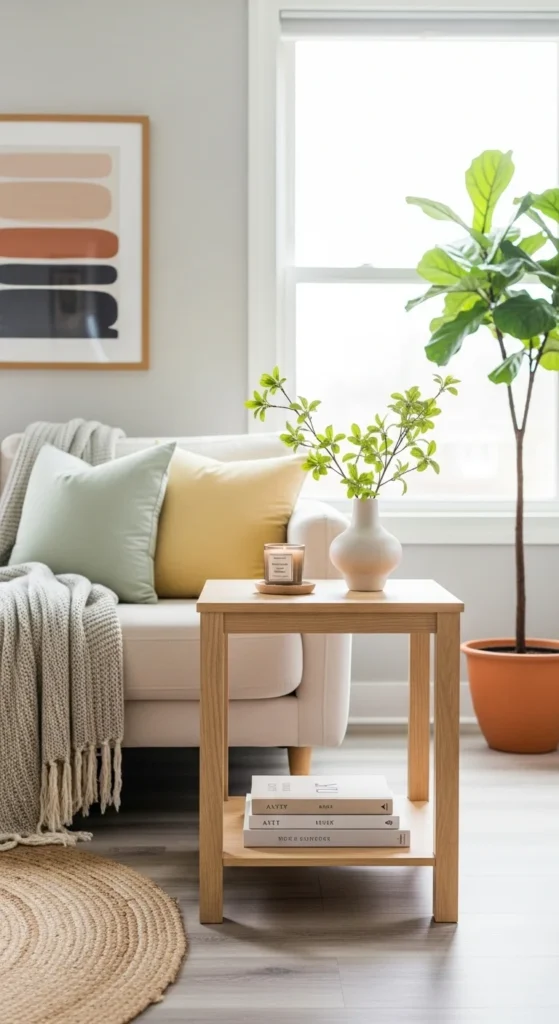
Clear side tables and restyle simply. Use one lamp or object per table.
Lighter materials feel better for spring. Wood or glass works well.
This keeps surfaces useful and uncluttered.
15. Use Mirrors to Reflect Light
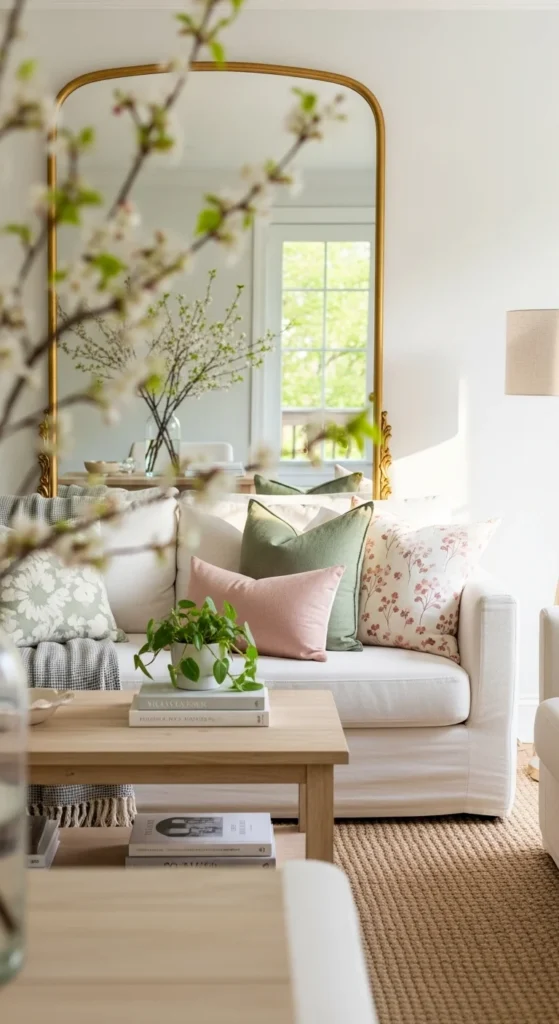
Mirrors help bounce light around the room. Position them across from windows when possible.
A simple frame works best. Thrifted mirrors can be repainted.
This makes the room feel brighter and more open.
16. Rotate Seasonal Accessories
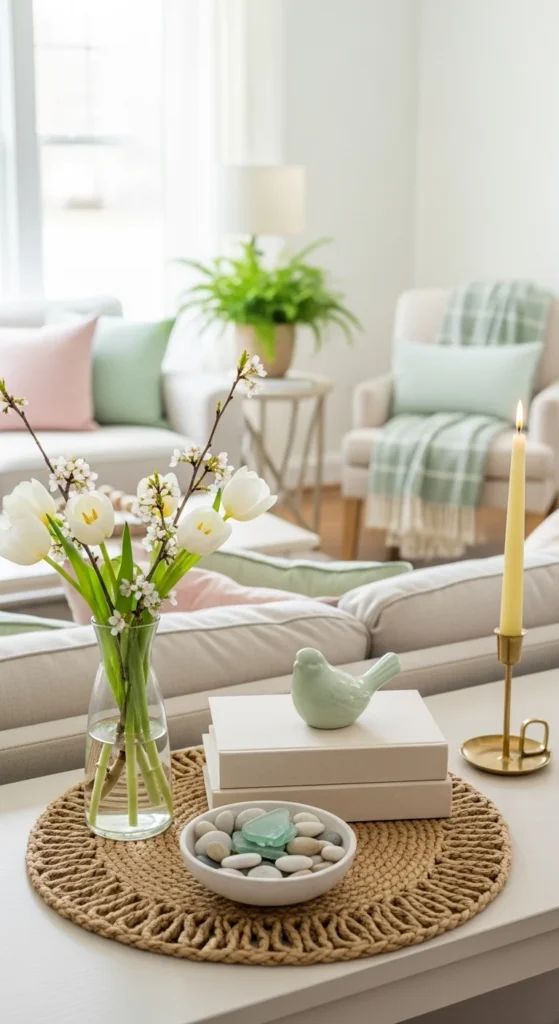
Store winter decor and bring out lighter pieces. Even changing candle holders helps.
Use items you already own. Less is more.
Seasonal rotation keeps decor intentional.
17. Switch Out Curtains Hardware
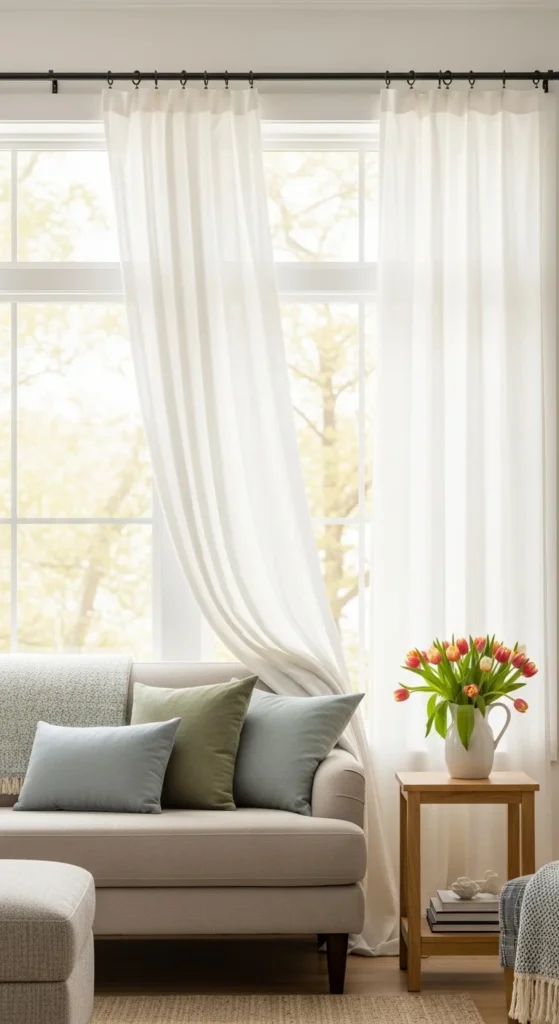
Swapping curtain rods or rings changes the look subtly. Slim rods feel lighter.
Keep finishes simple. Matte black or wood works well.
This update is small but noticeable.
18. Add a Simple Tray
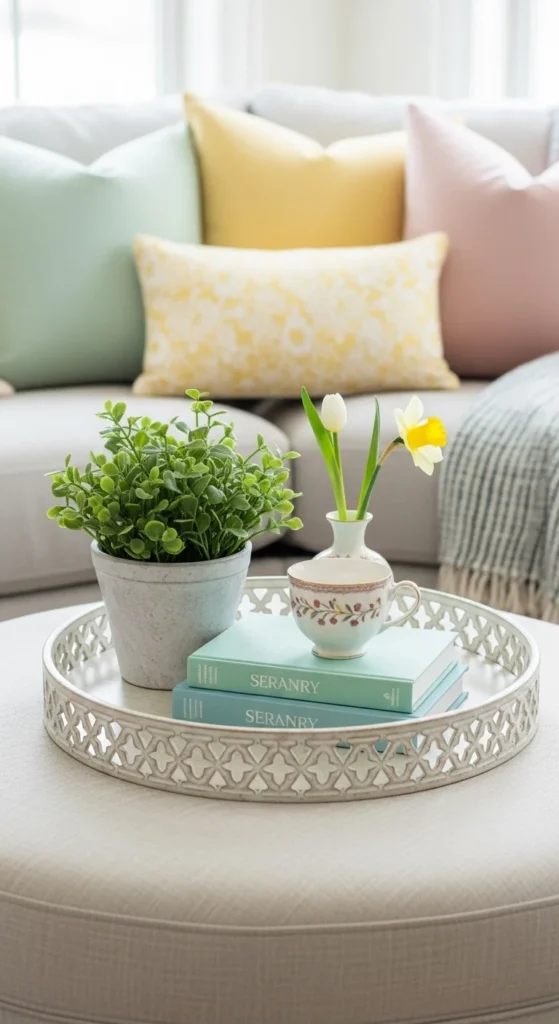
Trays organize small items. Choose wood or woven styles.
They help surfaces feel neat and styled.
A practical and affordable detail.
19. Rework the TV Area
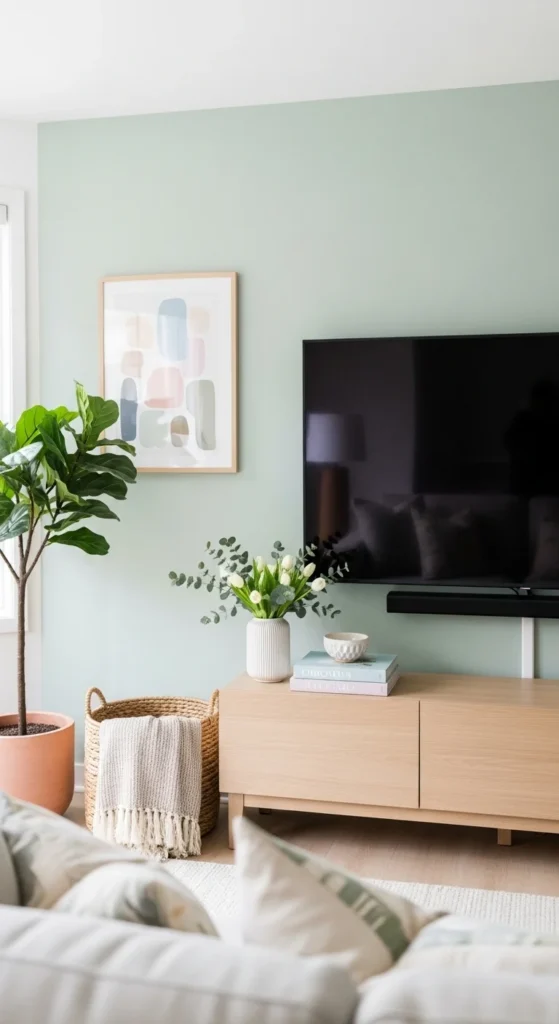
Clear clutter around the TV. Keep decor low-profile.
Use baskets for storage. This makes the area feel calmer.
A cleaner TV space improves the whole room.
20. Introduce Light Wood Accents
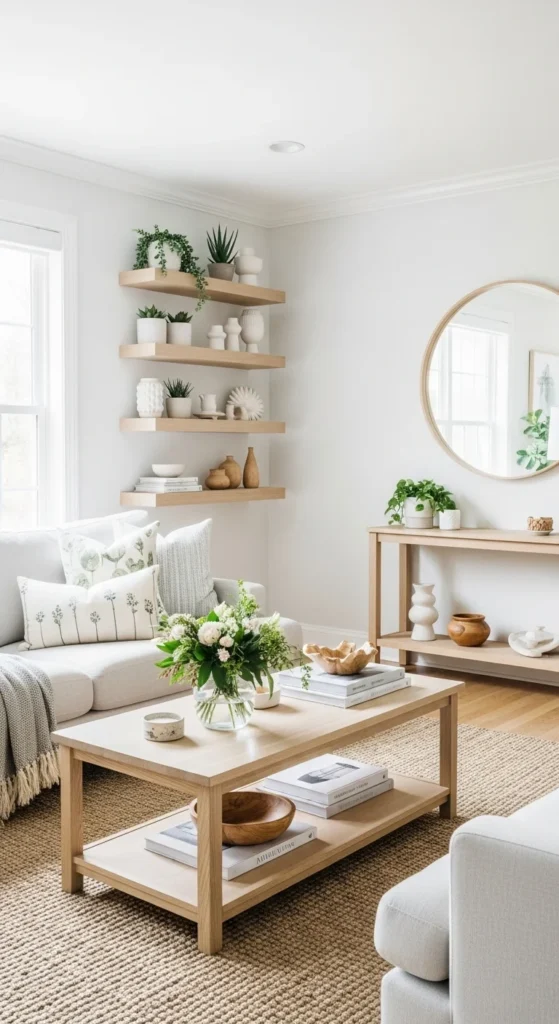
Light wood feels warm without heaviness. Add trays or small stools.
Thrift stores often have good finds.
This adds texture naturally.
21. Update Book Styling
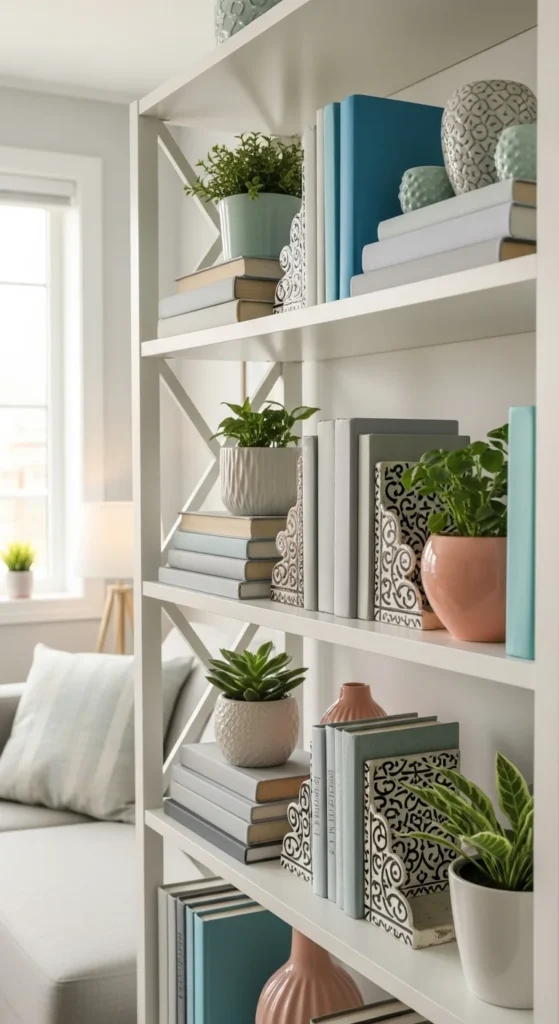
Restack books horizontally. Remove dark covers if possible.
Use only a few stacks. This feels lighter.
Books can act as decor without clutter.
22. Add Neutral Wall Hooks
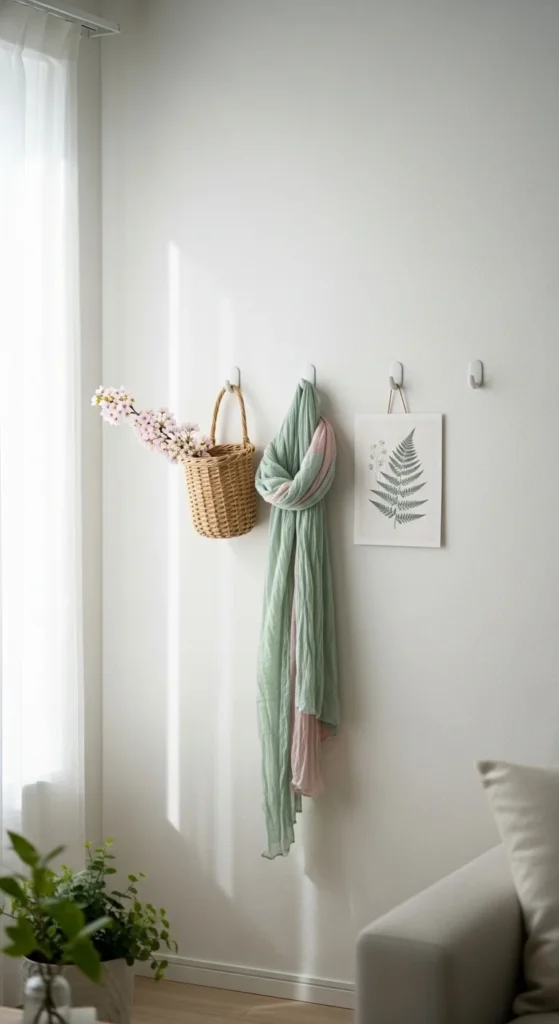
Wall hooks add function. Use them for hats or bags.
Choose simple shapes. Keep spacing even.
Functional decor keeps the room organized.
23. Style the Console Table
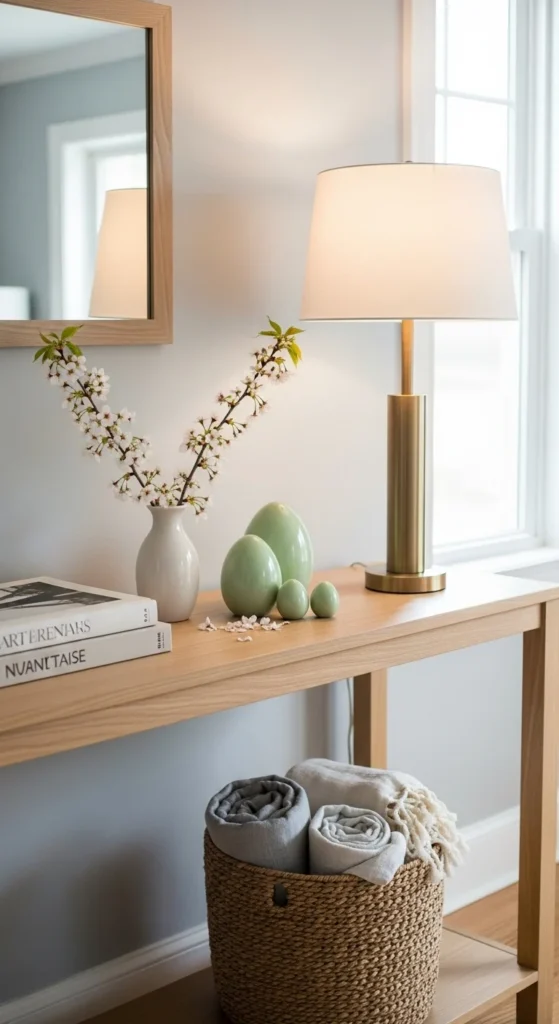
Clear the console and start over. Use one lamp and one object.
Leave space open. This avoids clutter.
A simple console anchors the room.
24. Add a Lightweight Ottoman
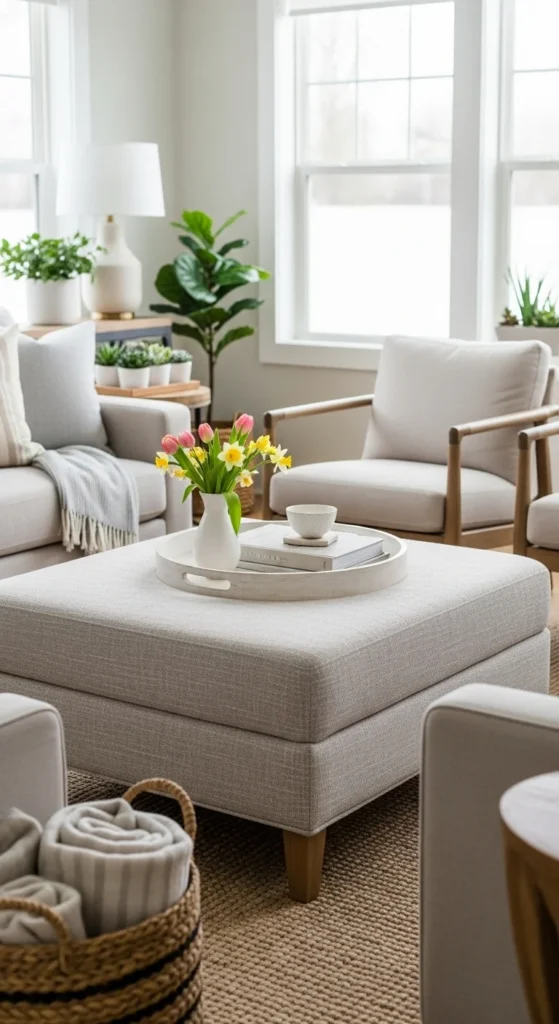
Ottomans add flexibility. Choose fabric styles in light colors.
They can double as seating or tables.
A useful addition without bulk.
25. Replace Dark Candles
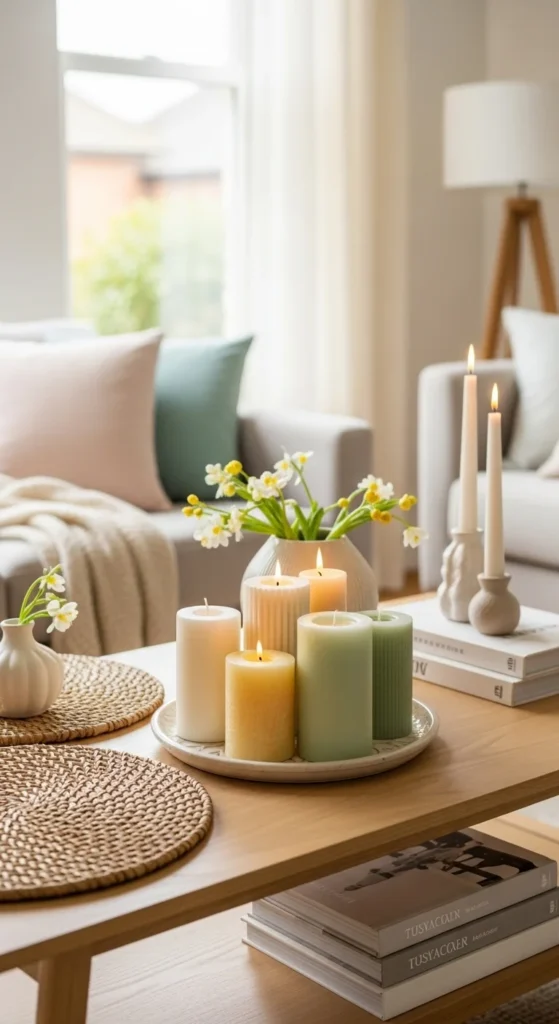
Switch dark candles for light tones. Cream or pale gray works well.
Group in small numbers.
A subtle detail that changes the mood.
26. Add Soft Textured Baskets
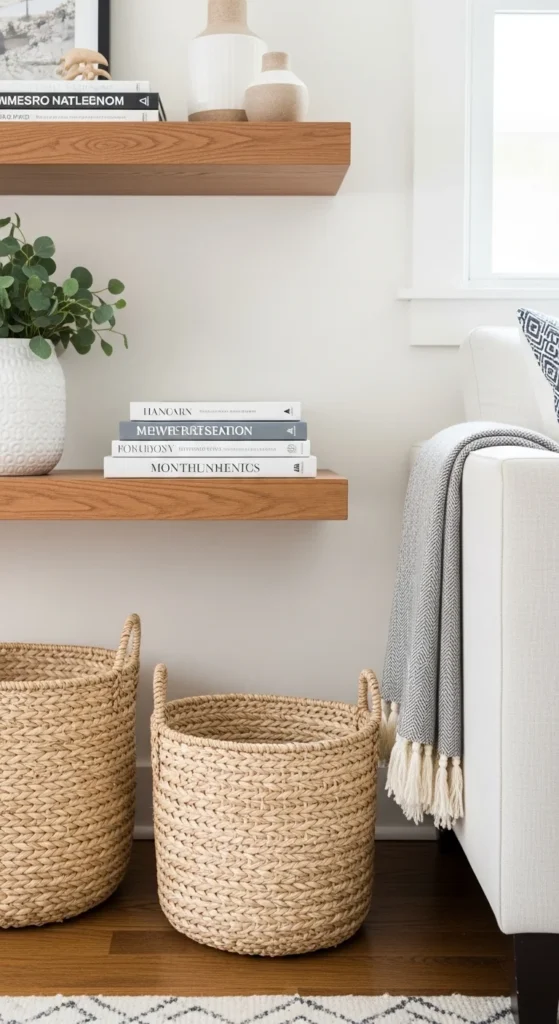
Baskets hide clutter neatly. Use them for throws or magazines.
Light fibers keep things relaxed.
Storage that looks good matters.
27. Use Scent Sparingly
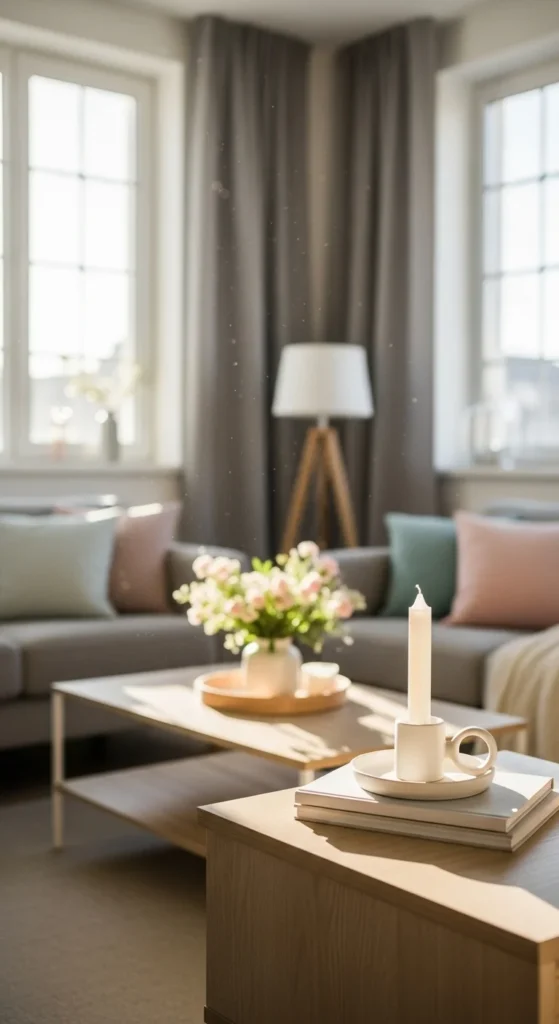
Light scents suit spring living rooms. Choose mild candles.
Avoid overpowering smells.
This supports a comfortable atmosphere.
28. Leave Some Space Empty
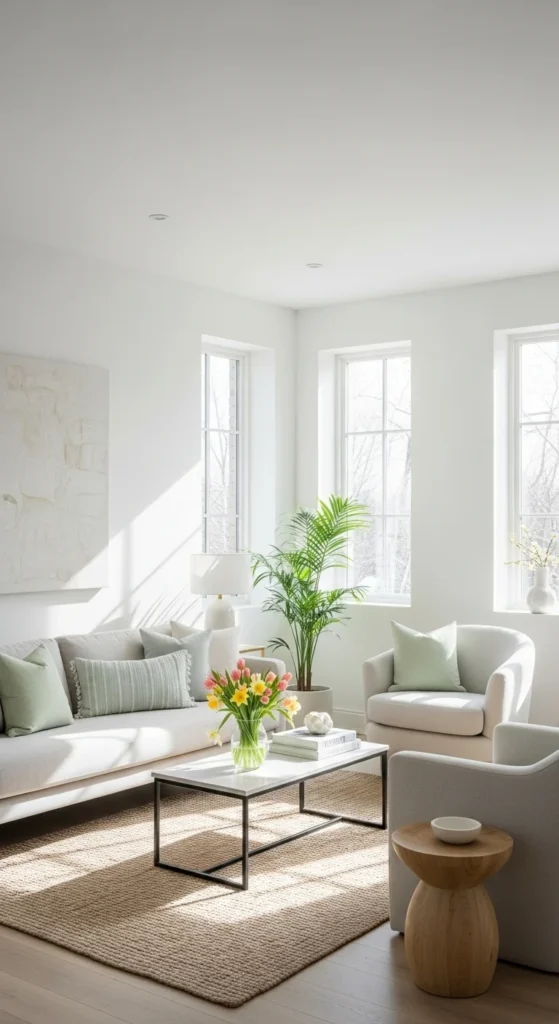
Not every corner needs filling. Open space helps the room breathe.
Remove one item and see how it feels.
This simple step often makes the biggest difference.
Conclusion
A spring living room refresh doesn’t have to feel overwhelming or expensive. Small changes in layout, texture, and styling can completely change how the space feels day to day. Focus on lightening visual weight, clearing clutter, and letting daylight work for you. Try one or two ideas at a time and adjust as you go. With simple updates, your living room can feel comfortable, open, and ready for the season ahead.
Leave a Reply