

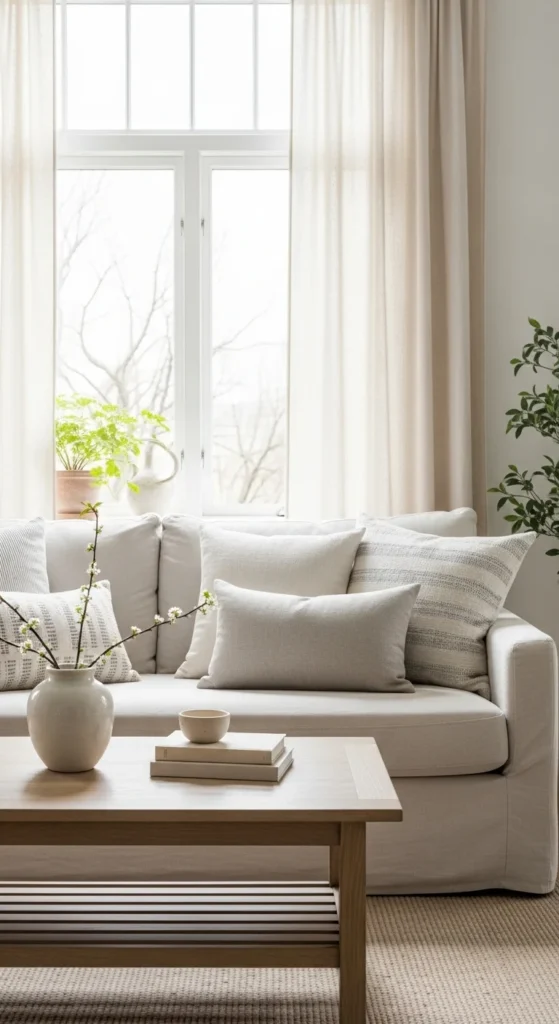
Neutral living rooms feel especially inviting during spring. Soft tones allow natural light to move freely, making spaces feel open and relaxed. With small updates like fabric swaps, light textures, and simple rearranging, a living room can feel lighter without repainting or replacing furniture. These ideas focus on simple changes, realistic DIY projects, and budget-aware styling that fit real homes and real routines.
1. Linen Sofa Slipcovers
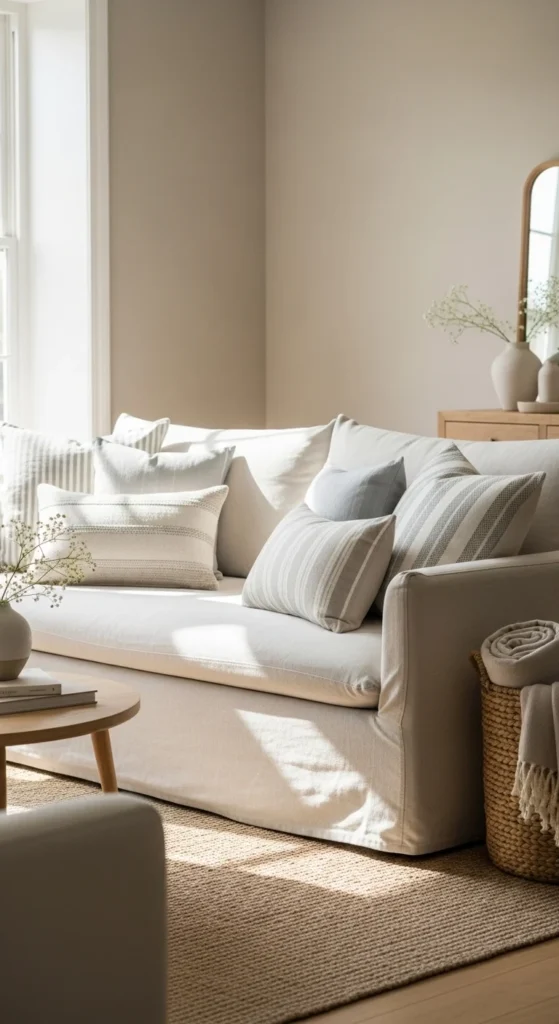
Linen slipcovers soften a living room instantly. They add texture while keeping the color palette calm. Light beige, ivory, or warm sand tones work well with spring light. Slipcovers also allow flexibility. You can remove and wash them easily, which keeps the space feeling tidy without stress.
For a budget option, look for ready-made slipcovers online or at home stores. Even slightly oversized covers look intentional when tucked neatly. If sewing is an option, flat linen sheets can be turned into custom covers with simple seams.
Style the sofa with pillows in similar tones but different textures. Think cotton, subtle stripes, or soft knits. Keep patterns minimal. The focus stays on comfort and ease rather than decoration.
2. Light Wood Coffee Tables
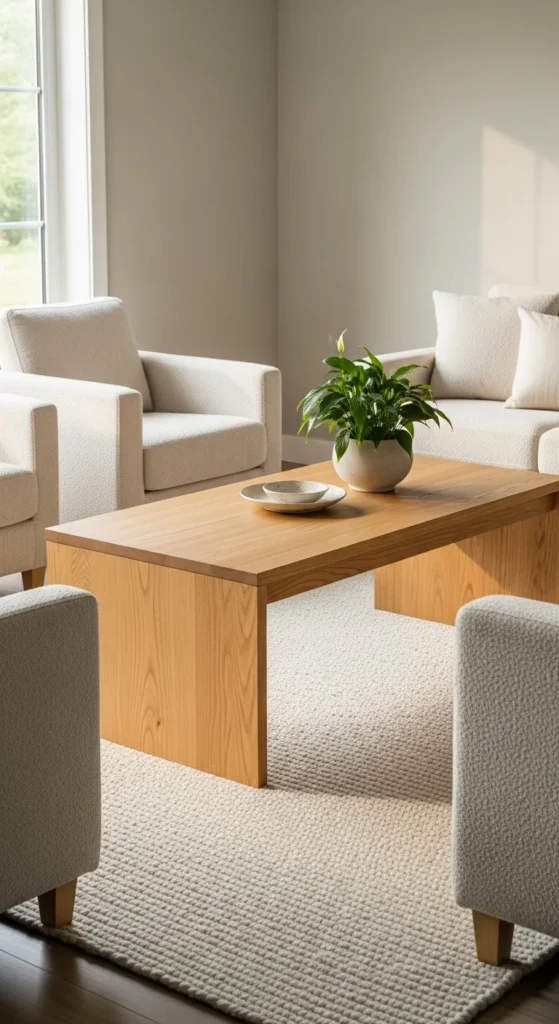
A light wood coffee table grounds a neutral living room without feeling heavy. Pale oak or pine reflects daylight and pairs well with spring decor. Simple shapes work best. Rounded edges feel relaxed and approachable.
If buying new isn’t an option, refinish an older table. Sand away dark stains and apply a clear matte seal. This reveals the natural grain and keeps the look soft.
Keep styling minimal. A tray, a small plant, and one book are enough. Leaving some surface visible helps the table feel intentional rather than cluttered.
3. Sheer Neutral Curtains
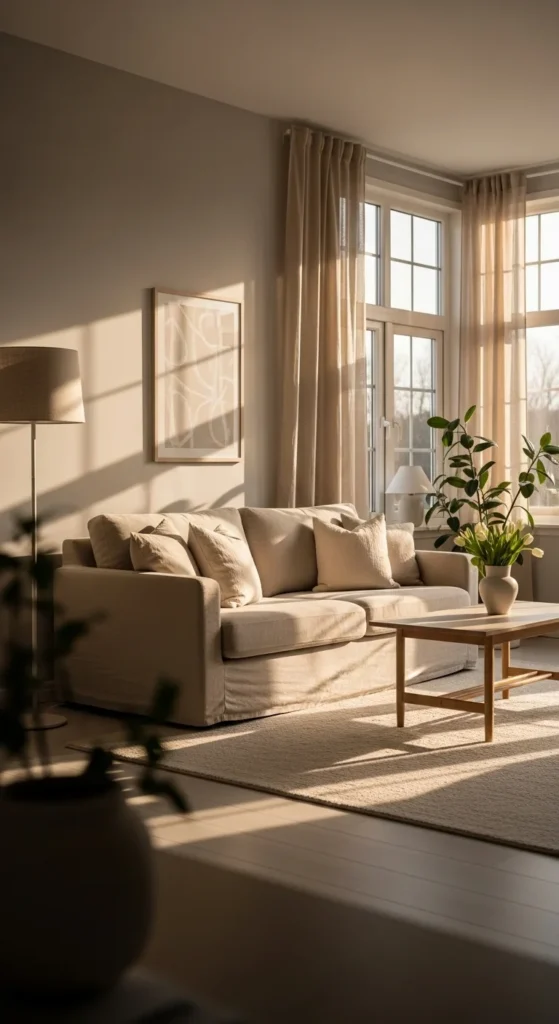
Sheer curtains allow sunlight to move freely through the room. Soft white or light beige panels frame windows without blocking light. They add privacy while keeping the space airy.
Hang curtains higher than the window frame. This draws the eye upward and makes ceilings feel taller. Affordable curtain panels work well when hemmed properly.
Avoid heavy rods or dark hardware. Simple wood or matte metal keeps the look cohesive. The result feels relaxed and open without effort.
4. Neutral Area Rugs
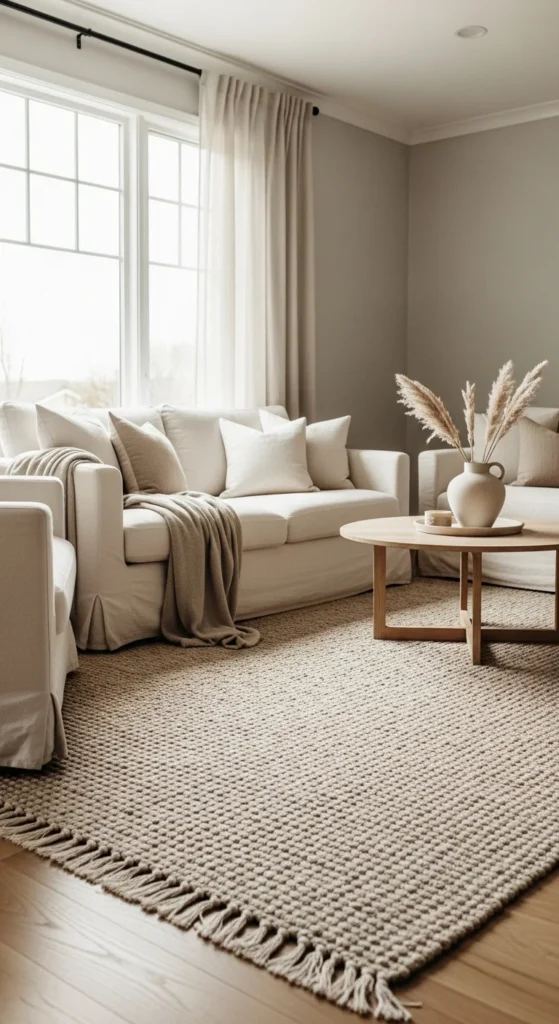
A neutral rug anchors seating while adding texture. Flatweave or low-pile rugs work well for spring. Look for subtle patterns rather than bold contrast.
Layering rugs is another budget-friendly option. Place a smaller textured rug over an existing one for depth. This adds interest without replacing everything.
Stick to warm neutrals. Avoid dark borders that visually shrink the room. The goal is openness and flow.
5. Soft Neutral Throw Pillows
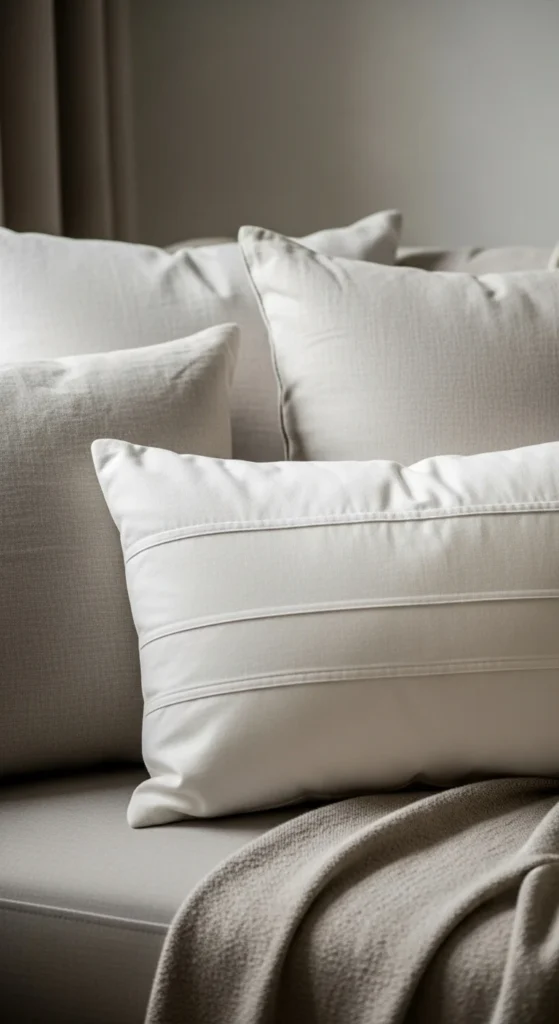
Pillows are one of the easiest updates. Swap heavy covers for linen or cotton in spring-friendly tones. Soft taupe, cream, and light gray work well together.
Mix textures rather than colors. This keeps the palette calm while adding dimension. Covers can be found affordably and stored for later seasons.
Limit patterns. One subtle stripe or weave is enough. Too many designs disrupt the relaxed feel.
6. Natural Wood Side Tables
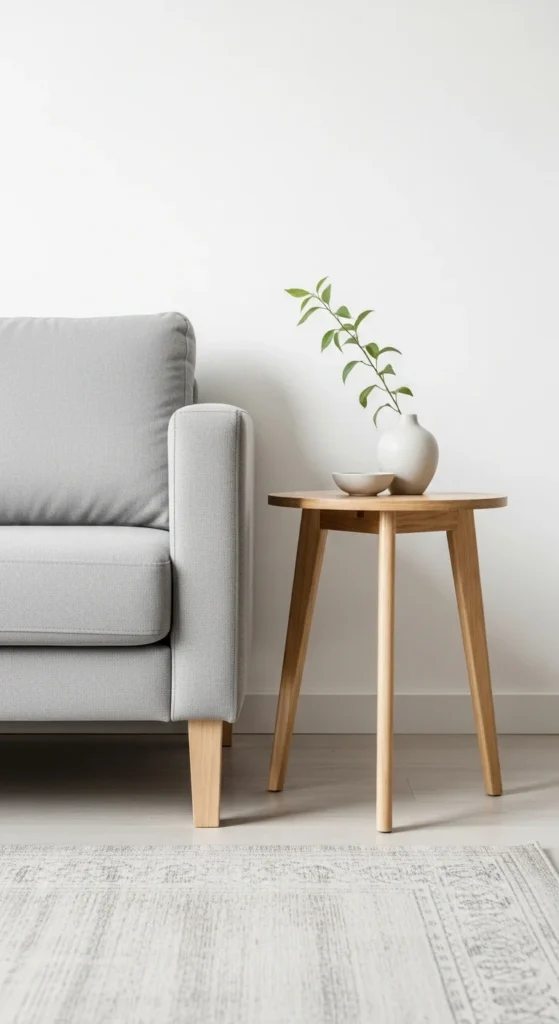
Side tables made from light wood add warmth without visual weight. Choose simple designs with open bases.
If space is tight, use stools or small accent tables. These pieces move easily and serve multiple purposes.
Keep decor minimal. A lamp and a small dish work well. Avoid stacking items.
7. White or Cream Walls
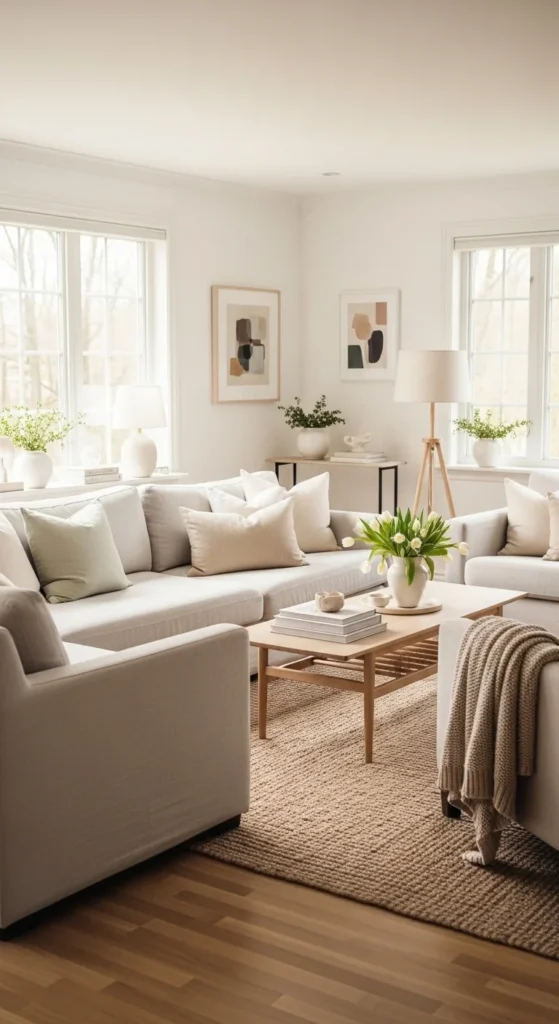
Light walls reflect daylight and support neutral decor. Soft white or warm cream tones work better than stark white.
If repainting isn’t possible, touch up high-traffic areas to keep walls looking clean. Even small improvements change the feel of a room.
Walls act as a backdrop. Keeping them simple allows furniture and textures to stand out naturally.
8. Subtle Greenery
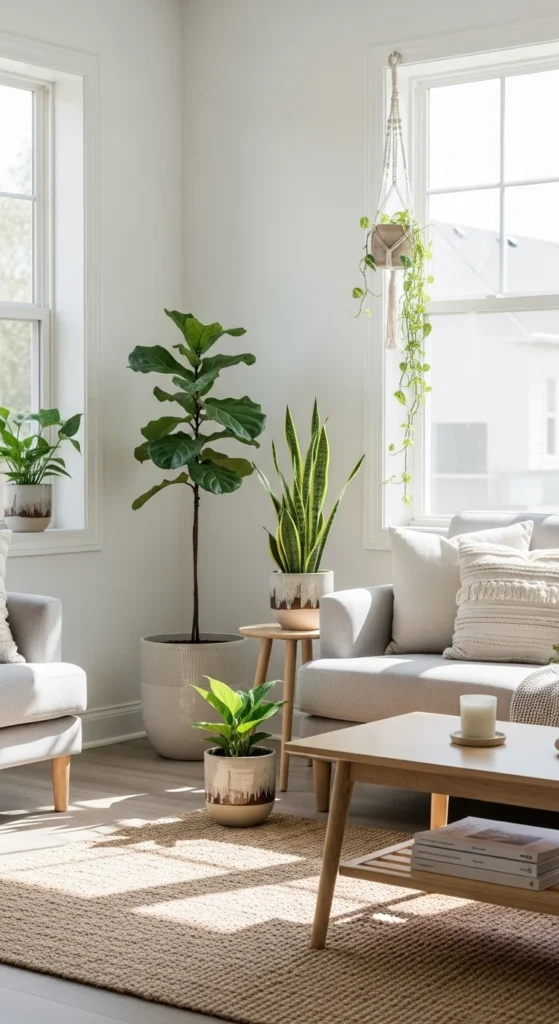
Greenery brings life into neutral spaces. Use one or two plants rather than many. This keeps the look calm.
Affordable options include pothos or snake plants. Place them near windows for natural light.
Choose neutral planters. White, beige, or clay tones blend well with the room.
9. Neutral Artwork
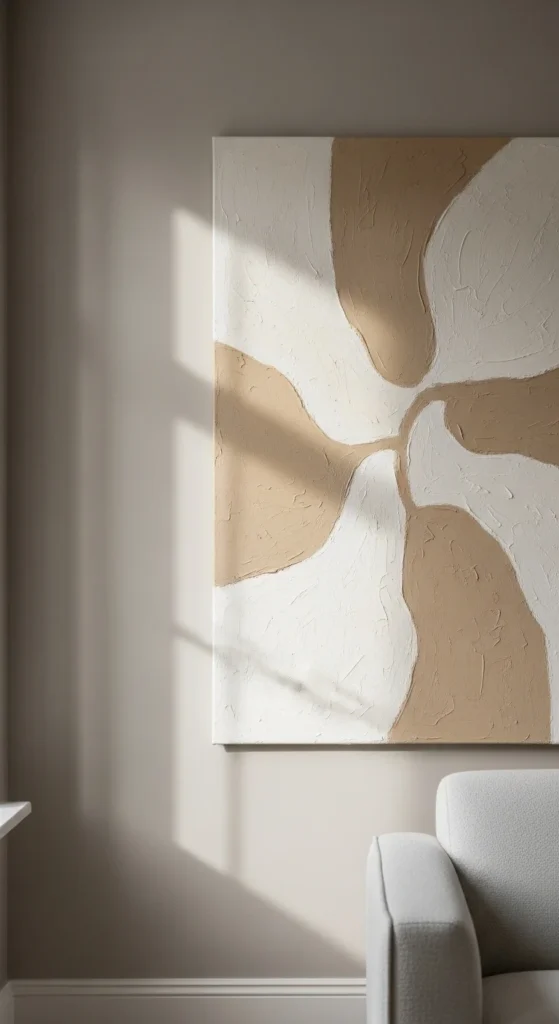
Artwork in muted tones supports a calm living room. Abstract prints or nature-inspired pieces work well.
Frames should stay simple. Light wood or thin metal keeps focus on the art.
Hang pieces at eye level and allow space between frames. This avoids visual clutter.
10. Woven Storage Baskets
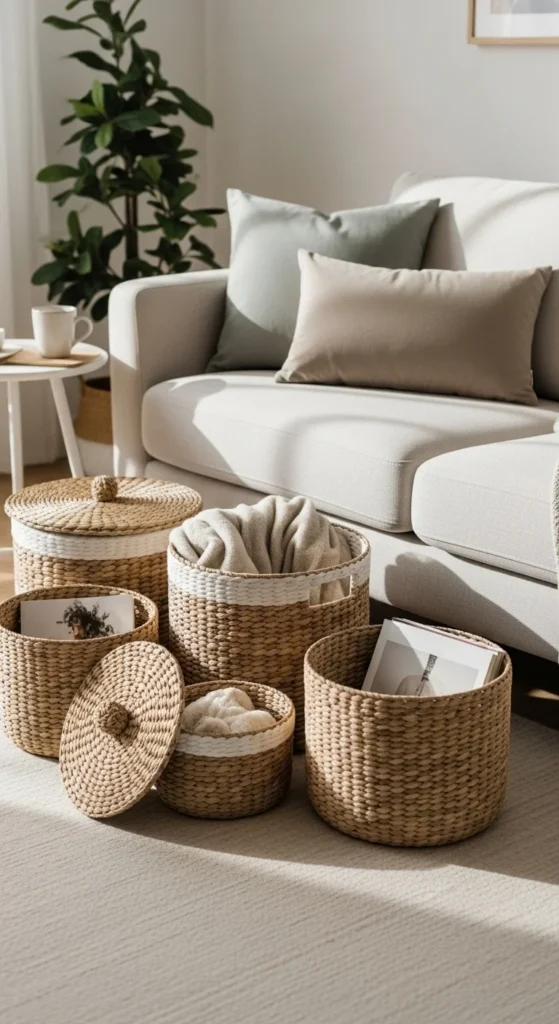
Woven baskets add texture while hiding everyday items. Use them for blankets or magazines.
Natural fibers pair well with neutral decor. Place baskets near seating for easy access.
They also replace bulky storage furniture in small rooms.
11. Minimal Coffee Table Styling
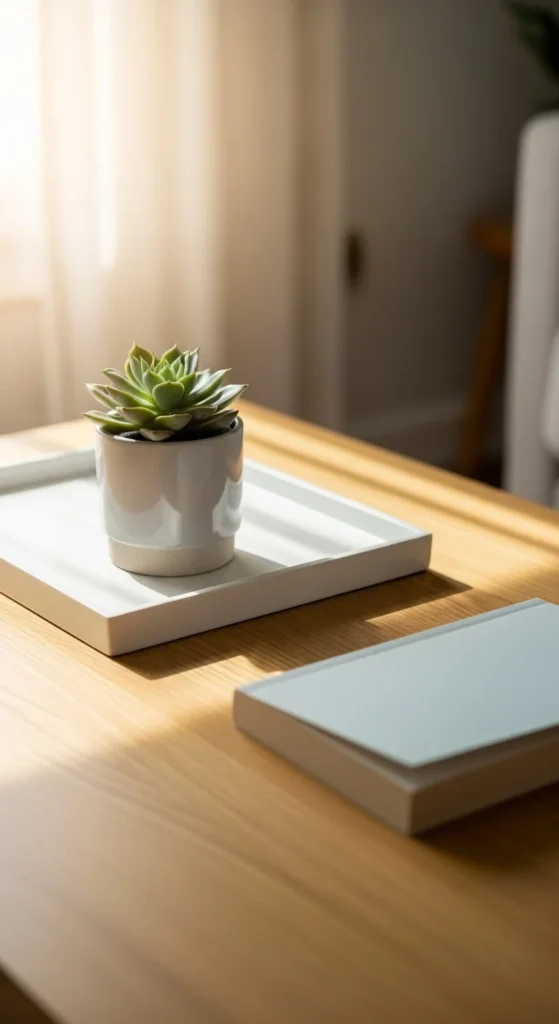
Keep coffee table decor simple. Three items are enough. This makes cleaning easier and keeps the room feeling open.
Use a tray to group items. It adds structure without crowding the surface.
Rotate items seasonally to keep the setup interesting.
12. Soft Neutral Throws
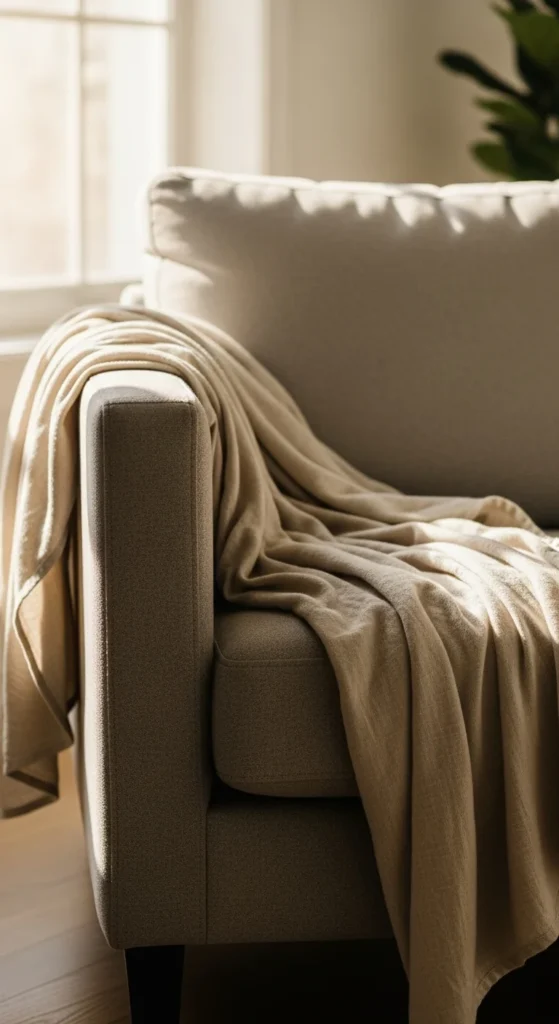
Lightweight throws add comfort without bulk. Cotton or linen works well during spring.
Fold throws neatly or drape casually over an armrest. Avoid heavy textures.
Stick to one or two throws only.
13. Neutral Accent Chairs
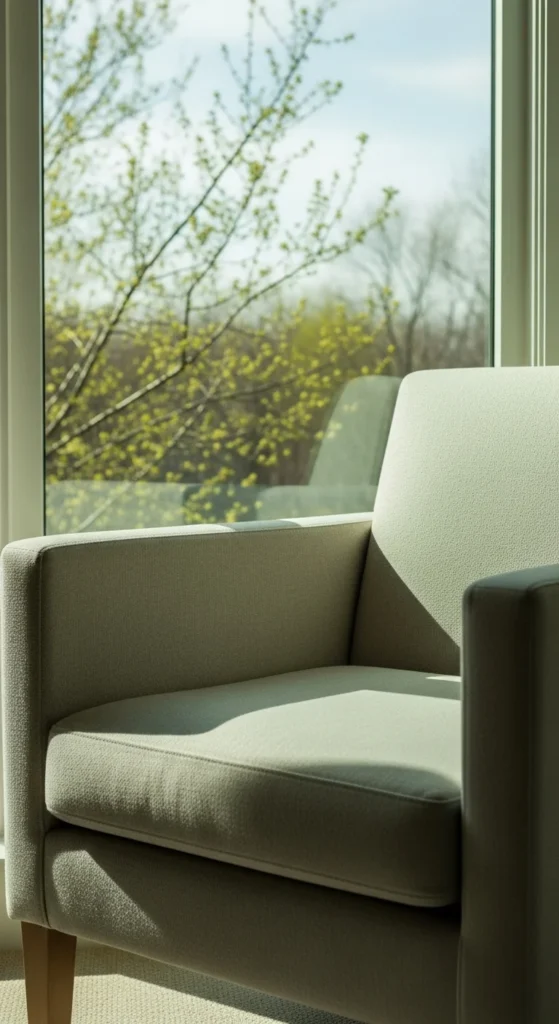
Accent chairs in neutral upholstery add seating without overwhelming the room. Simple shapes work best.
Shop secondhand for solid frames and reupholster if needed. Neutral fabric is widely available.
Place chairs near windows to create inviting reading spots.
14. Light Wood Shelving
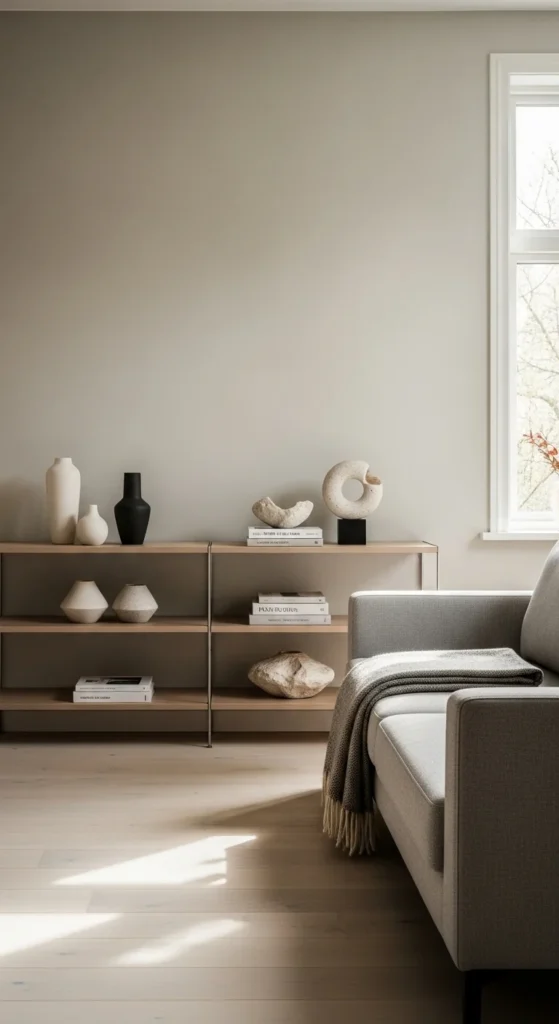
Open shelving in light wood adds warmth and storage. Keep items spaced out.
Display only a few pieces. Books, small plants, and ceramics work well.
Avoid overloading shelves to maintain balance.
15. Neutral Lampshades
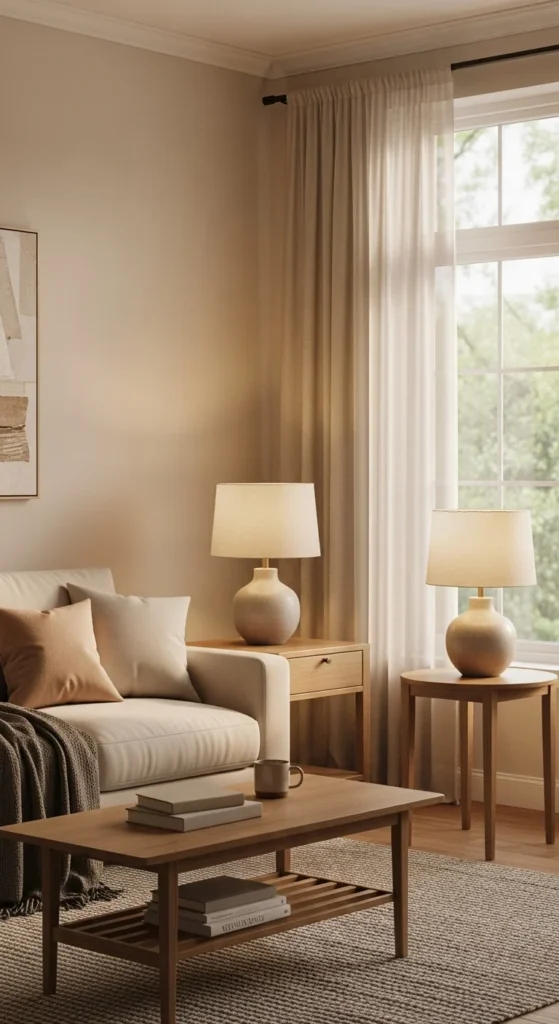
Switching lampshades changes the room instantly. Light fabric shades soften lighting.
Avoid dark or patterned shades during spring. Simple shapes work best.
Shades are affordable and easy to store later.
16. Low Furniture Profiles
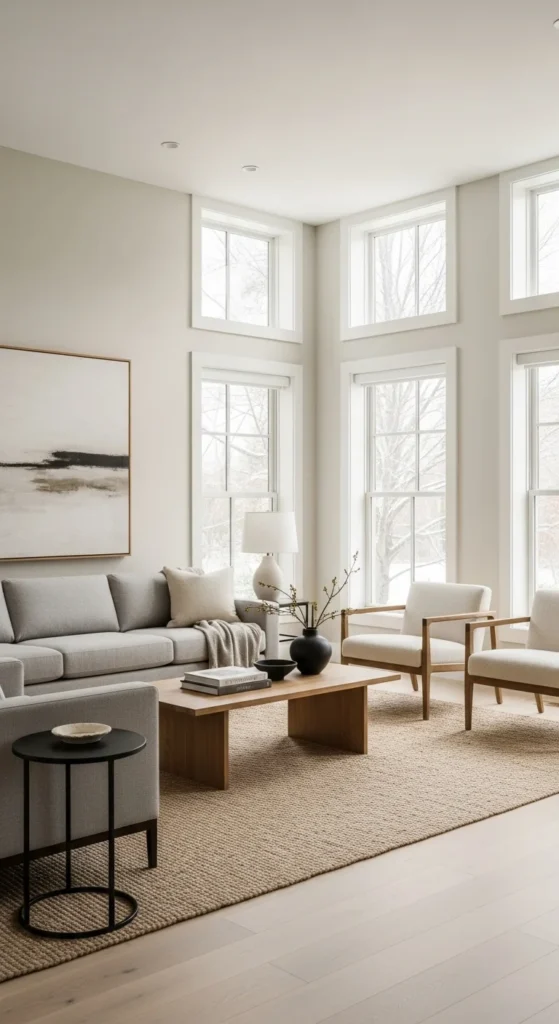
Low furniture keeps sightlines open. This makes rooms feel larger and calmer.
Avoid tall backs or bulky arms when possible. Clean lines support neutral styling.
Rearranging existing furniture often achieves this effect.
17. Neutral Wall Mirrors
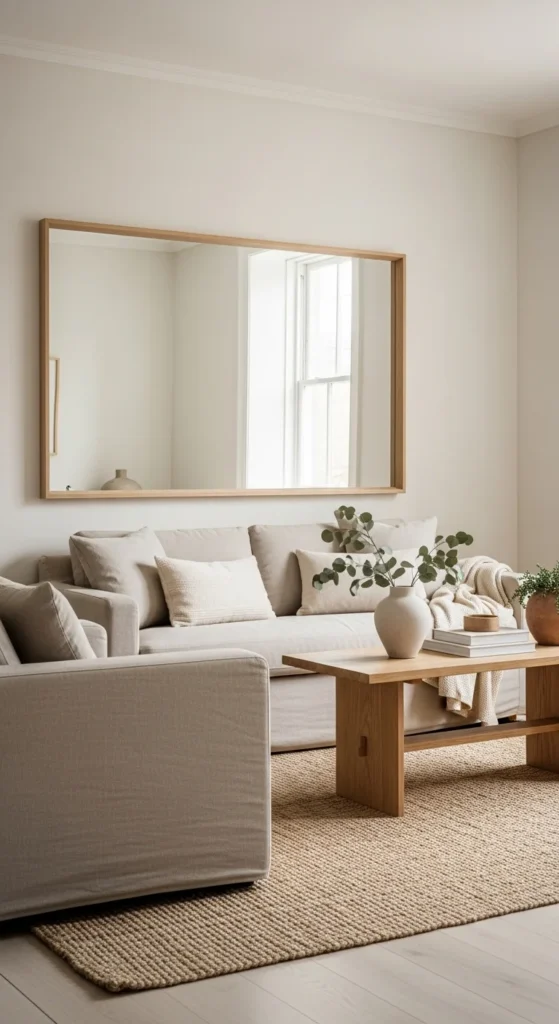
Mirrors reflect light and open up spaces. Choose frames in wood or soft metal.
Place mirrors opposite windows when possible. This spreads natural light evenly.
Keep surrounding decor minimal.
18. Simple Window Treatments
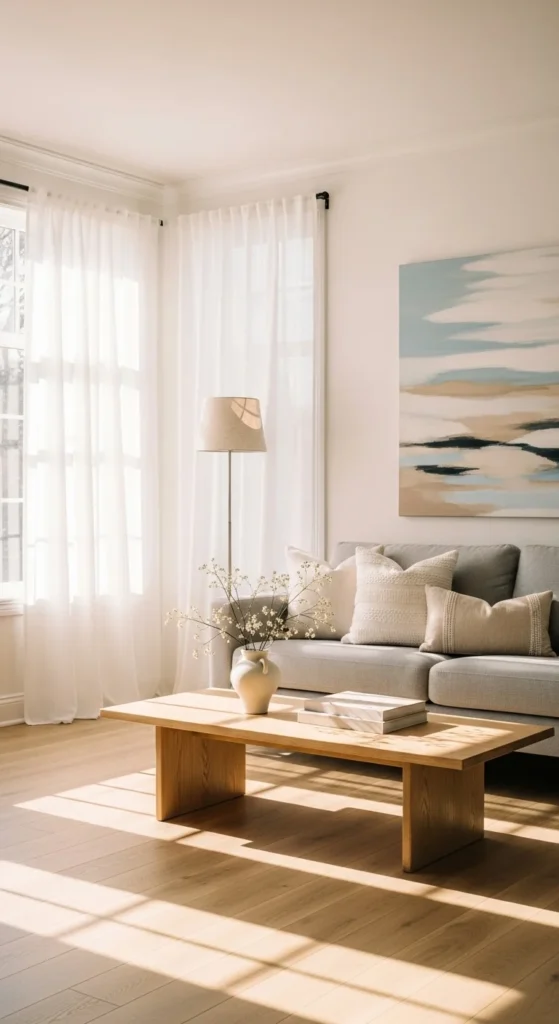
Skip heavy drapes. Simple panels or shades work best for spring.
Neutral fabrics allow flexibility with other decor.
Keep hardware minimal and light in tone.
19. Neutral Poufs
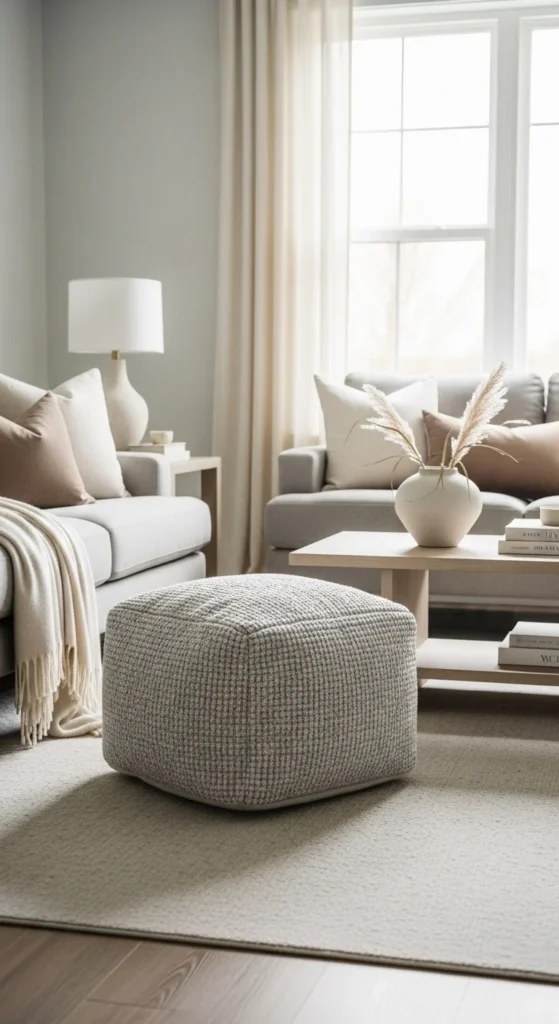
Poufs provide flexible seating and footrests. Choose fabric or woven styles in neutral tones.
They move easily and store under tables when not in use.
Poufs work well in small living rooms.
20. Balanced Furniture Spacing
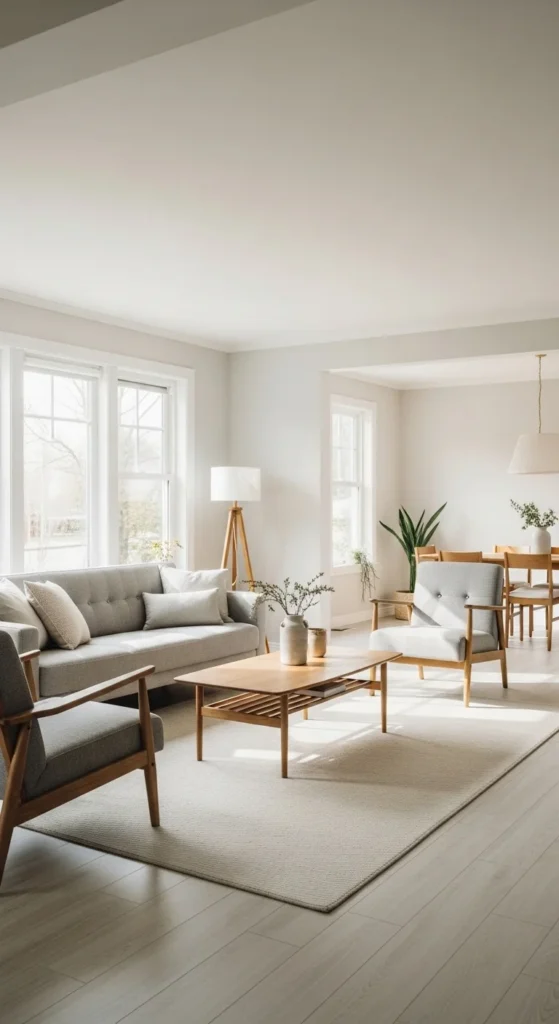
Spacing matters as much as decor. Leave room for easy movement.
Pull furniture slightly away from walls. This creates depth and flow.
Rearranging costs nothing and changes the room instantly.
21. Neutral Decorative Trays
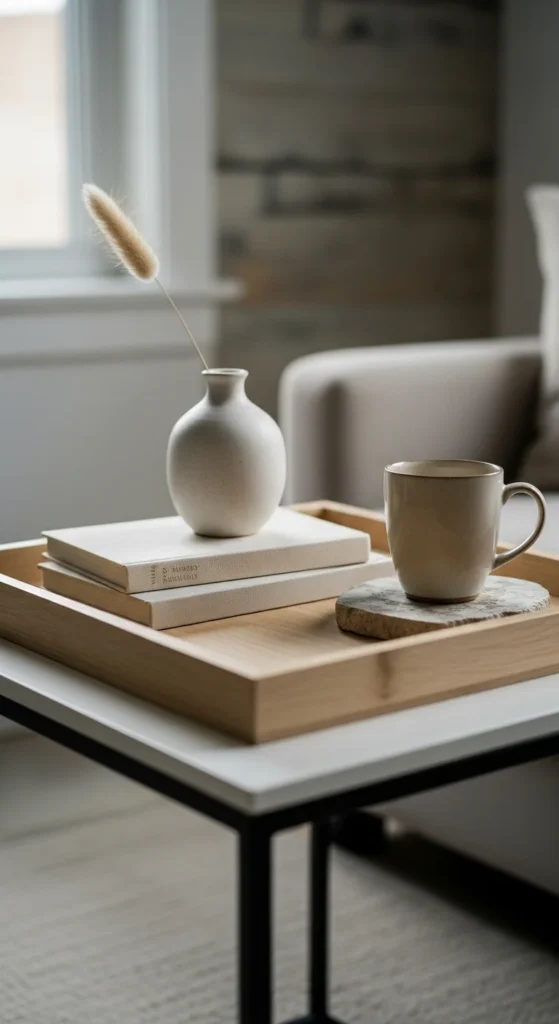
Decorative trays keep small items organized. Choose wood or ceramic options.
Limit what goes inside the tray. This keeps surfaces tidy.
Trays also make cleaning easier.
22. Consistent Color Palette
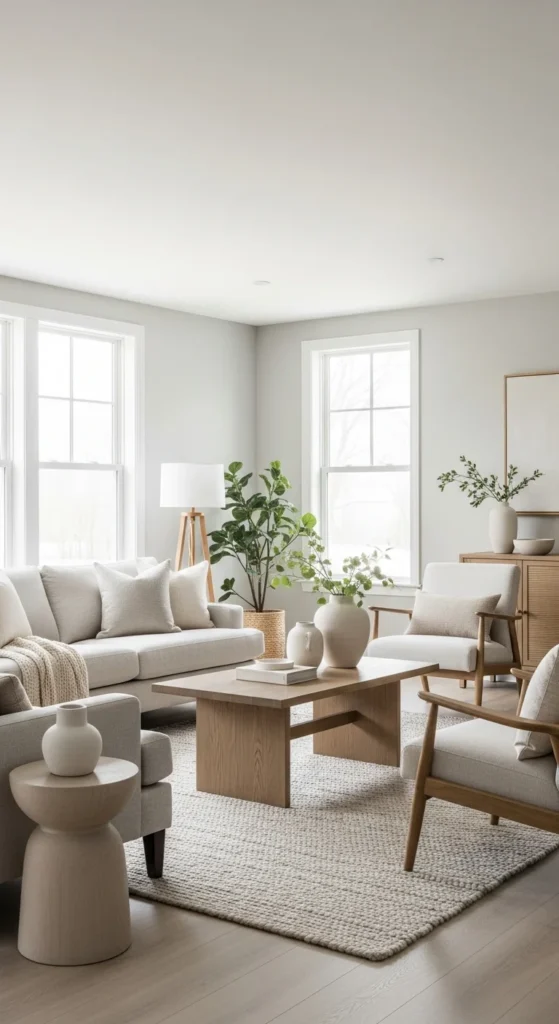
A consistent palette ties the room together. Stick to two or three neutral tones.
Repeat colors across pillows, rugs, and decor. This creates harmony without effort.
Small changes make a big difference when colors stay aligned.
Conclusion
Neutral living rooms work well for spring when textures stay light and layouts stay open. By focusing on simple fabric swaps, natural materials, and thoughtful spacing, it’s possible to refresh a space without major purchases. Start with one change, build gradually, and allow natural light to shape the room’s mood.
Leave a Reply